
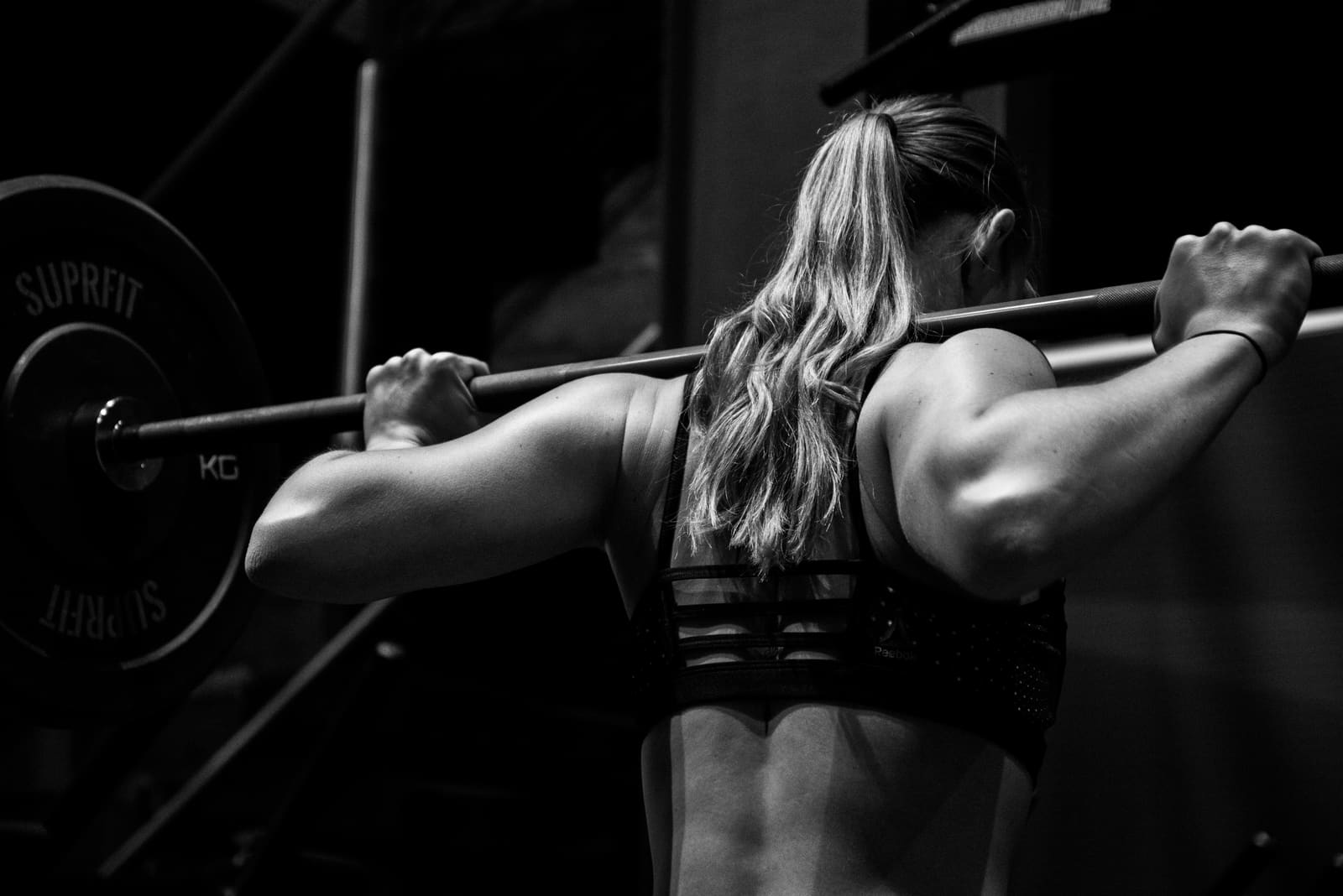
Look at yourself in the mirror. No, really. Look.
Cart-horse quads, veined calves, and above the waist? Nothing. An underfed T-Rex. The arms of a 12-year-old, shoulders rolling forward, a caved-in chest.
You call it “being lean”. I call it physical decay.
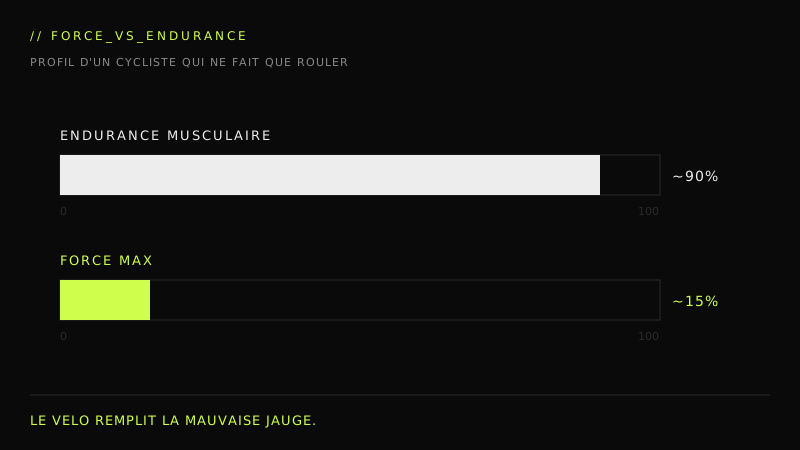
You drop €10,000 to save 300 grams on your bike, and you refuse to put on 1 kg of useful muscle. The kilo that would stop you folding like a house of cards after three hours in the saddle.
Your gym phobia does not make you faster. It makes you fragile. Worse, it caps your engine.
The shrimp syndrome
The modern cyclist is a biomechanical aberration. Pedal and do nothing else for long enough and you develop what I call the shrimp syndrome.
Back permanently hunched, the aero position turned into a way of standing in the world. Arms that exist only to hold a handlebar and an espresso cup. A posterior chain missing in action: short hamstrings, amnesic glutes.
You think you are “optimised for climbing”? Wrong. You are just breakable.
When your lower back screams at km 80, that is not you paying your dues. That is your chassis giving up. That is your structure telling you it cannot take the power your heart wants to send.
No, you are not going to turn into Schwarzenegger
Excuse number one, and I hear it every week: “I don’t want to lift, it’ll make me heavy, W/kg, you understand…”
Stop right there.
Do you honestly believe that touching a squat bar twice a week gets you 10 kg of extra biceps overnight? Bodybuilders spend their whole lives trying to add volume. They eat like ogres and inject things you do not want to know about. You, with your quinoa salad and your 15 hours of cardio, are immune to volume.
There are two kinds of hypertrophy, and they have nothing to do with each other. Sarcoplasmic hypertrophy inflates the muscle with fluid and stores: volume, little strength, bodybuilder territory, useless to you. The other one, myofibrillar and neuromuscular, densifies the fibre and improves nerve recruitment. That is the one we are after.
A strong cyclist is not big. A strong cyclist is dense. More fibres recruited for the same effort, and better economy out of it.
A Ferrari engine in a rusted-out hatchback
Picture a Ferrari V12. That is your heart, your lungs, your VO2max. Now bolt it into a rusted-out hatchback: your skeleton and your current stabiliser muscles.
What happens when you floor it? The chassis twists. The vibration tears everything apart. The power never reaches the ground.
That is exactly your problem. If your trunk is soft, part of the force from your legs goes into stabilising a pelvis that rocks instead of turning the crank. Watts straight in the bin. And a weak body fights permanently to hold its position: that burns oxygen. Oxygen that never reaches your thighs.
A strong back and solid shoulders are a rigid anchor point. To pull hard on a pedal, you have to pull hard on the bars without deforming.
The Cornerman protocol
Forget your 5-minute planks on a yoga mat with Netflix running. Static core work does nothing when the job is producing force in movement.
You need load. Mechanical stress. The “LaJoj” plan.
The non-negotiable pillars for getting out of the shrimp state:
A. Heavy
No sets of 20. You already do 5,000 of those every time you ride for two hours. In the gym you train what the bike never trains: max strength.
- Squat / hack squat: the base. Pure push.
- Deadlift / RDL: vital. The cyclist is quad-dominant with weak hamstrings. The RDL armours your posterior chain and protects your knees.
B. Anti-shrimp: posture and back
So you stop looking like a comma.
- Heavy rows, bent-over or dumbbell: to build a back that holds 6 hours without flinching.
- Face pulls: the king exercise for pulling your shoulders back and undoing the hunch the bike builds.
C. Structure
- Farmer’s walk: grab two heavy dumbbells and walk. It teaches your spine to brace under load, exactly like when you stand on the pedals and crush them.
Conclusion: be an athlete, not just an engine
Cycling is an endurance sport, but performance is a strength problem.
Keep neglecting your structural integrity and you will plateau. You will get injured. And you will get dropped by people who worked out that a strong body is a fast body.
Stop being scared of the iron. Go lift something heavy. Build a chassis worth your engine.
Cornerman, out.